Ovarian cancer refers to any cancerous growth that occurs in the ovary. The majority of ovarian cancers arise from the epithelium (outer lining) of the ovary.

According to the American Cancer Society, it is the 8th most common cancer among women in the United States (excluding non-melanoma skin cancers).
However, it is the 5th most common cause of cancer deaths in women. Among the gynecologic cancers (uterine, cervical, and ovarian), ovarian cancer has the highest rate of deaths.
Each year, more than 22,000 women in the U.S. are diagnosed with ovarian cancer and around 14,000 will die.
Tragically, the overall 5-year survival rate is only 46 percent in most developed countries (it is lower for more advanced stages).
However, according to the National Cancer Institute, if diagnosis is made early, before the tumor has spread, the 5 year survival rate is 94 percent.
However, according to the National Cancer Institute, if diagnosis is made early, before the tumor has spread, the 5 year survival rate is 94 percent.
Symptoms of Ovarian Cancer

In the early stages, ovarian cancer usually has few symptoms; in many cases, there are no symptoms at all.
Patients often attribute their symptoms to other conditions, such as premenstrual syndrome,irritable bowel syndrome, or a temporary bladder problem.
The main difference between ovarian cancer and other possible disorders is the persistence and gradual worsening of symptoms.
The following are examples of possible early symptoms of ovarian cancer:
- Pain in the pelvis
- Pain on the lower side of the body
- Pain in the lower stomach
- Back pain
- Indigestion or heartburn
- Feeling full rapidly when eating
- More frequent and urgent urination
- Pain during sexual intercourse
- Changes in bowel habits, such as constipation
As ovarian cancer progresses, these symptoms are also possible:
- Nausea
- Weight loss
- Breathlessness
- Tiredness
- Loss of appetite
If an individual experiences bloating, pressure, or pain in the abdomen or pelvis that persists for more than a few weeks they should see a doctor immediately
Causes of Ovarian Cancer
Although we know that ovarian cancer, like many other cancers, is caused by cells dividing and multiplying in an unregulated way, nobody completely understands why cancer of the ovary occurs.
However, we know that the following risk factors are linked to a higher chance of developing the disease:
Family History
As ovarian cancer progresses, these symptoms are also possible:
- Nausea
- Weight loss
- Breathlessness
- Tiredness
- Loss of appetite
If an individual experiences bloating, pressure, or pain in the abdomen or pelvis that persists for more than a few weeks they should see a doctor immediately
Causes of Ovarian Cancer
Although we know that ovarian cancer, like many other cancers, is caused by cells dividing and multiplying in an unregulated way, nobody completely understands why cancer of the ovary occurs.
However, we know that the following risk factors are linked to a higher chance of developing the disease:
Women with close relatives who have had ovarian cancer, or breast cancer, have a higher risk of developing ovarian cancer compared to other women.
Genetic screening can determine whether somebody carries certain genes that are associated with an increased risk.
Age
The majority of ovarian cancers occur in women over 65.
High Number of Total Lifetime Ovulations
There is a link between the total number of ovulations during a woman's life and the risk of ovarian cancer. Four main factors influence the total:
- The more times a woman has become pregnant, the lower her risk is
- Women who have never been on the contraceptive pill have a higher risk
- Women who started their periods at an early age have a higher risk
- Women whose menopause started later than average have a higher risk
Infertility or Fertility Treatment
Some studies have found a link between infertility treatment and a higher risk of ovarian cancer. Nobody knows whether the risk is because of the infertility treatment, infertility itself, or both.
Breast Cancer
Women who have been diagnosed with breast cancer have a higher risk of developing ovarian cancer.
HRT (Hormone Replacement Therapy)
HRT slightly increases a women's risk of developing ovarian cancer. Experts say that the risk increases the longer the HRT continues, and returns to normal as soon as treatment stops.
Obesity/Overweight
Being obese or overweight increases the risk of developing many cancers.
Endometriosis
Women who develop endometriosis have an approximately 30 percent higher risk of developing ovarian cancer compared with other women.
Diagnosis of Ovarian Cancer
A doctor will carry out a vaginal examination and check for any visible abnormalities in the uterus or ovaries. They will also check the patient's medical history and family history.
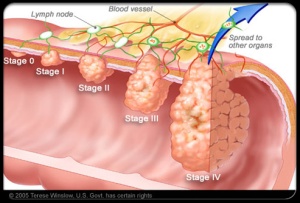
After a diagnosis of ovarian cancer, the doctor will want to identify its stage and grade.
The stage of a cancer refers to the cancer's spread while the grade refers to how the cancer cells look under the microscope - if they are similar in appearance to normal cells or if they look malignant.
By identifying the stage and grade of the cancer, the doctor will be able to decide on the best treatment.
The stage and grade of ovarian cancer alone cannot predict how it is going to develop.
The following tests are used to diagnose ovarian cancer:
- Blood test.
- Ultrasound
- Laparoscopy - a laparoscope (a thin viewing tube with a camera at the end) is inserted into the patient through a small incision in the lower abdomen.
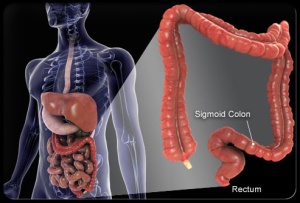
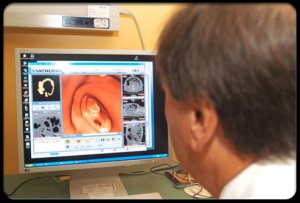
- Colonoscopy - if the patient has had bleeding from the rectum or is constipated, the doctor may order a colonoscopy to examine the large intestine (colon). This test is not always used.
- Abdominal fluid aspiration - this is done if the patient's abdomen is swollen. A buildup of fluid in the abdomen might indicate that the ovarian cancer has spread.
- CT scan.
- MRI
Treatment for Ovarian cancer
consists of surgery, chemotherapy, a combination of surgery with chemotherapy, and, sometimes, radiotherapy.
The kind of treatment depends on many factors, including the type of ovarian cancer, its stage and grade, as well as the general health of the patient.
Surgery

A surgical removal of the cancer is done in the vast majority of ovarian cancer cases, and is often the first treatment the patient will undergo.
Unless the ovarian cancer is very low grade, the patient will require an extensive operation that includes the removal of both ovaries, the fallopian tubes, the uterus, nearby lymph nodes, and the omentum (a fold of fatty tissue in the abdomen).
This operation, sometimes referred to as a total hysterectomy and bilateral salpingo-oophorectomy, will mean that the woman will begin her menopause immediately.
If the cancer is confined to just one of the ovaries, the surgeon may just remove the affected ovary and the adjoining fallopian tube. The woman will have a chance of being able to conceive. If both ovaries are removed, it will not be possible to conceive.
This type of surgery requires a stay in hospital of 3-7 days, plus a recovery period of at least 4-6 weeks when the patient gets home.
Chemotherapy
is the use of chemicals (medication) to destroy cancer cells. Cytotoxic medication (drugs that are poisonous to cells) prevents cancer cells from dividing and growing. Chemotherapy for ovarian cancer, as well as most other cancers, is used to target cancer cells that surgery cannot or did not remove.
Treatment usually involves 3-6 chemotherapy sessions (called cycles) which will be given 3-4 weeks apart, giving the body time to recover. If the cancer returns or begins to grow back again, chemotherapy may be given again to shrink it.
Targeted therapy

Newer medications are being developed that target specific pathways (or necessary functions) in cancer cells directly. These medications include bevacizumab (Avastin) and olaparib (Lynparza). Their advantage over traditional chemotherapy is that they limit damage to normal cells, therefore reducing common side effects.
Hormone Therapy
Hormone therapy may be added to the treatment plan in order to prevent estrogen from reaching the cancer cells. Cutting off its supply of estrogen slows cancer cell's growth.
Monitoring response to chemotherapy
Tests will be carried out to determine how well the chemotherapy is working. This will include blood tests and imaging scans to see if the tumors have shrunk. Sometimes the surgeon may want to have another look inside.
If all tests are clear of cancer, it is referred to as "in remission" - the cancer is under control.
If cancer is still present after chemotherapy treatment, doctors will switch to other treatments.
Side effects of chemotherapy
Chemotherapy targets rapidly dividing cells. Unfortunately, healthy rapidly dividing cells, such as red and white blood cells, and hair follicles may also be affected.
The severity and type of side effects depend on the kind of medication, number of treatments, and some aspects of the patient and their general health. Side effects can include:
- Nausea, vomiting
- Diarrhea
- Hair loss
- Loss of appetite
- Mouth sores
- Anemia
- Infections because the white blood cell count is low (leucopenia)
In the vast majority of cases, the damaged healthy cells repair themselves rapidly after treatment is over and the side-effects soon disappear.